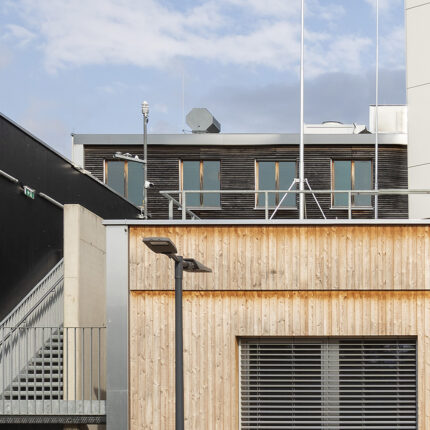
The Building Envelopes and Building Systems Working Group focuses on modularization, standardization, affordability, a high level of prefabrication, multifunctionality, digitalization, and solutions for infill development.
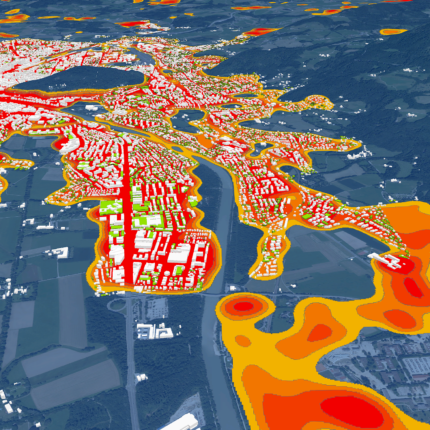
The Settlement Systems Working Group uses integrative spatial and simulation models in geoinformatics to support the sustainable development of settlement areas.
The Building Envelopes and Building Systems Working Group conducts research and development on modern building envelope systems and (timber) building systems and, together with the Energy Systems Working Group, on multifunctional building-component systems. Building systems enable short construction times, low noise exposure, higher quality, and the use of personnel with task-specific training through digitalization, standardization, and a high degree of prefabrication. These systems promote efficient, cost-saving construction methods and are ideally suited for adding stories to and expanding existing buildings to reduce land consumption. Digitalization enables cost-effective, individually adaptable solutions based on standardized systems, (partially) automated planning and calculations, and the creation of building component and material inventories to support circularity. Multifunctional building systems combine building components and building services into a single system, saving resources and adding new functions. Development takes place in collaboration with the Energy Systems Working Group.
Settlement Systems
The Settlement Systems Working Group uses integrative spatial and simulation models in geoinformatics to support the sustainable development of settlement areas. These models enable data-driven decisions, parcel-level identification of densification potential, and sustainable land management that takes the residential environment, mobility, and energy into account. This approach helps create future-ready, sustainable, and livable settlements in the Alpine region and other resource-constrained regions that are more spatially compact, more mixed-use in function, and more efficient in transportation.
Energy Systems
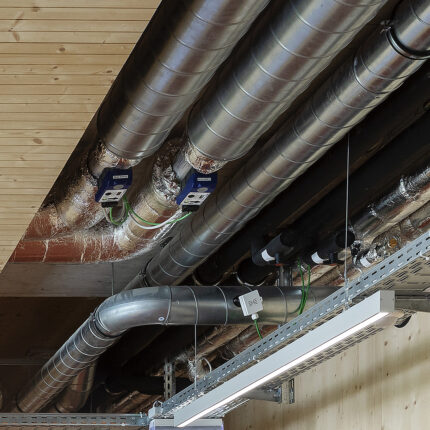
Renewable energy sources such as wind and solar require flexible adjustment of energy demand and shifting peak loads to periods of high generation. The Energy Systems Working Group researches innovative energy concepts, especially for existing buildings. The current focus is on TABS – Thermally Activated Building Systems, in particular using mass timber as a renewable building material. These TABS turn buildings into thermal energy storage, reduce the need for grid expansion, and promote the use of renewable energy. Multifunctional building systems combine building components and building services into a single system, saving resources and adding new functions. The Energy Systems Working Group develops these systems in collaboration with the Building Envelopes and Building Systems Working Group.