Background
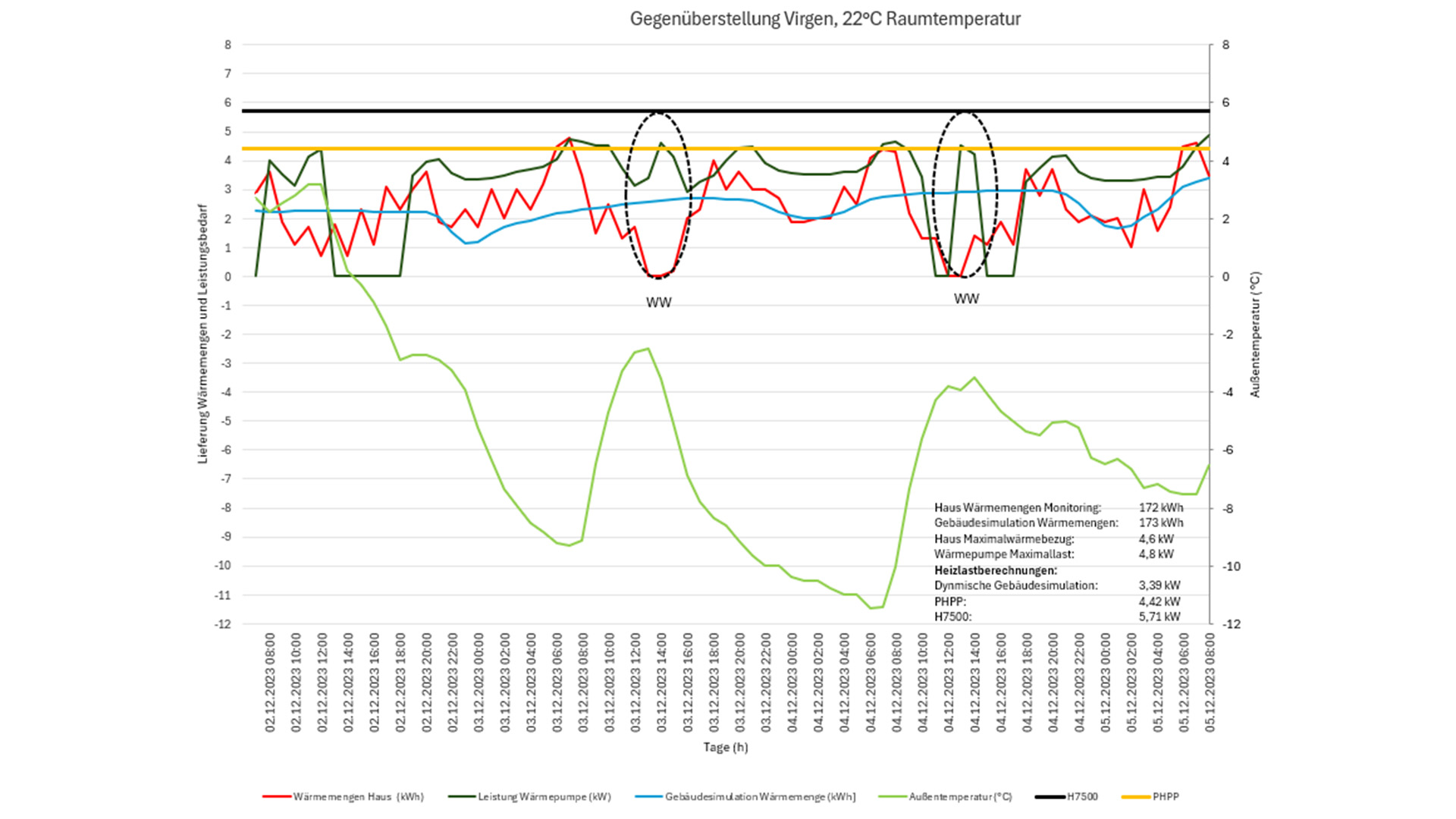
Current standards offer different methods for calculating heating load. In previously completed research projects, it was found that standard-based calculations often overestimate energy consumption and required capacity for different buildings, and therefore present results that are largely pessimistic.
This discrepancy already occurs in typical existing buildings and increases further for optimized building concepts such as nearly zero-energy buildings. In these buildings, heat pumps are often used for space heating, and oversizing is particularly unfavorable. Oversized heat pumps reduce efficiency and service life and make it more difficult to implement ground-coupled thermal storage sources.
Project Objective
For these reasons, the HL-(N)ZEB project examines the deviation between the standard-calculated heating load, the heating load derived from dynamic building simulations, and the actual heating load in operation (monitoring data). The focus is on nearly zero-energy buildings with radiant surface heating systems (low-temperature systems). The current calculation methods are reviewed, assessed, and, where necessary, proposals for changes are developed. This is intended to support broader application of future-ready, innovative systems and building envelopes and to further develop calculation methods in step with technological progress.