Background
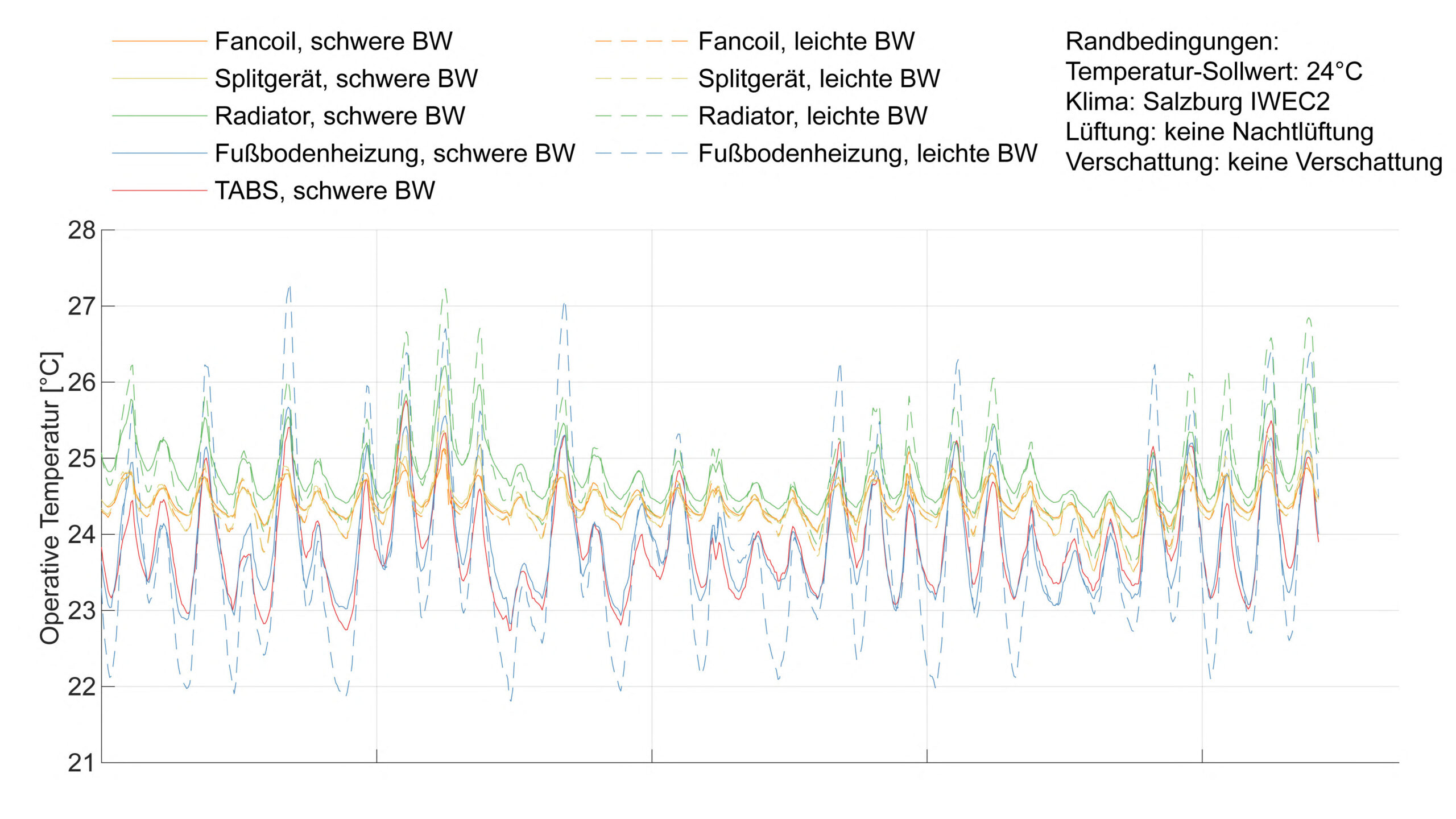
Cooling in residential buildings is increasingly coming into focus due to climate change. This project carries out a scenario study on the cooling energy demand of different systems in residential construction. To this end, various passive measures, supply systems, and delivery systems are compared and assessed in terms of energy efficiency. Building on the project results, requirements for cooling in residential buildings can be formulated for future evaluations and funding programs.
Results
The previous assumption that residential buildings can maintain comfortable temperatures without active cooling if planned appropriately is no longer tenable in view of current climate developments. Passive measures are proving to be efficient and necessary, but not sufficient. Passive cooling via the ground or groundwater can cool buildings efficiently and make them fit for the future.