Background
Multifunctional façade and building-component systems integrate structural and building services functions into a single building component or system (multifunctional systems). This integration optimizes resource use, minimizes space requirements, and simplifies construction processes. Examples include multifunctional ceiling systems that, in addition to their load-bearing function, accommodate heating, cooling, and building services equipment, as well as façades that combine structure, solar energy generation, and ventilation.
Project Objectives
Although many such systems exist or have existed, there is no systematic analysis of physical processes, technical solutions, possible combinations of building-services and structural components, and the resulting use cases (usage scenarios). As a result, there is also a lack of a qualitative market analysis and of an identification of development potential based on it. MoMS aims to close this research gap and to refine the research needs for subsequent projects.
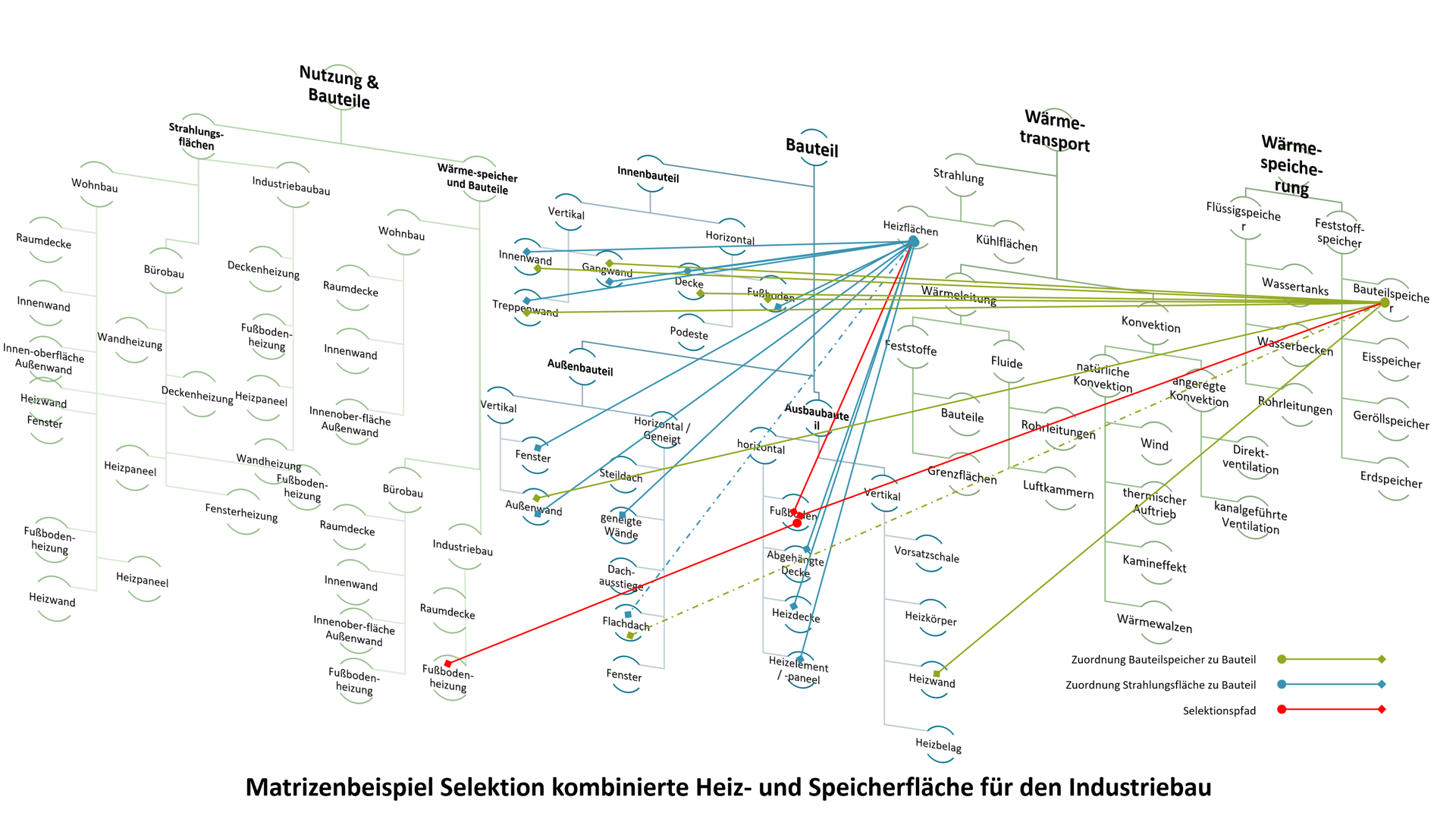
The methodology is based on the creative technique known as the “morphological box” for criteria-based idea generation and translates it into a systematically structured creation of linked matrices. These matrices map relationships among different technical, functional, and application-oriented aspects of the systems. Through sequential analysis and combination of these matrices, development potential is identified and evaluated with regard to use and market potential.