Background
The Friedrich-Inhauser-Straße housing complex in Salzburg underwent comprehensive modernization to bring together key goals such as climate action, affordability, and building on within the existing building stock. As part of ZeCaRe III, the project examined how technical and process innovations work in practice and what impacts they have, especially in the areas of energy, mobility, social infrastructure, and costs.
Project Objective
The monitoring aimed to systematically capture and assess the effects of the construction-related and organizational measures. The focus was on energy efficiency, resident satisfaction, cost trends, and the quality of collaboration among project partners. The results are intended to serve as a basis for future sustainable housing projects.
Results
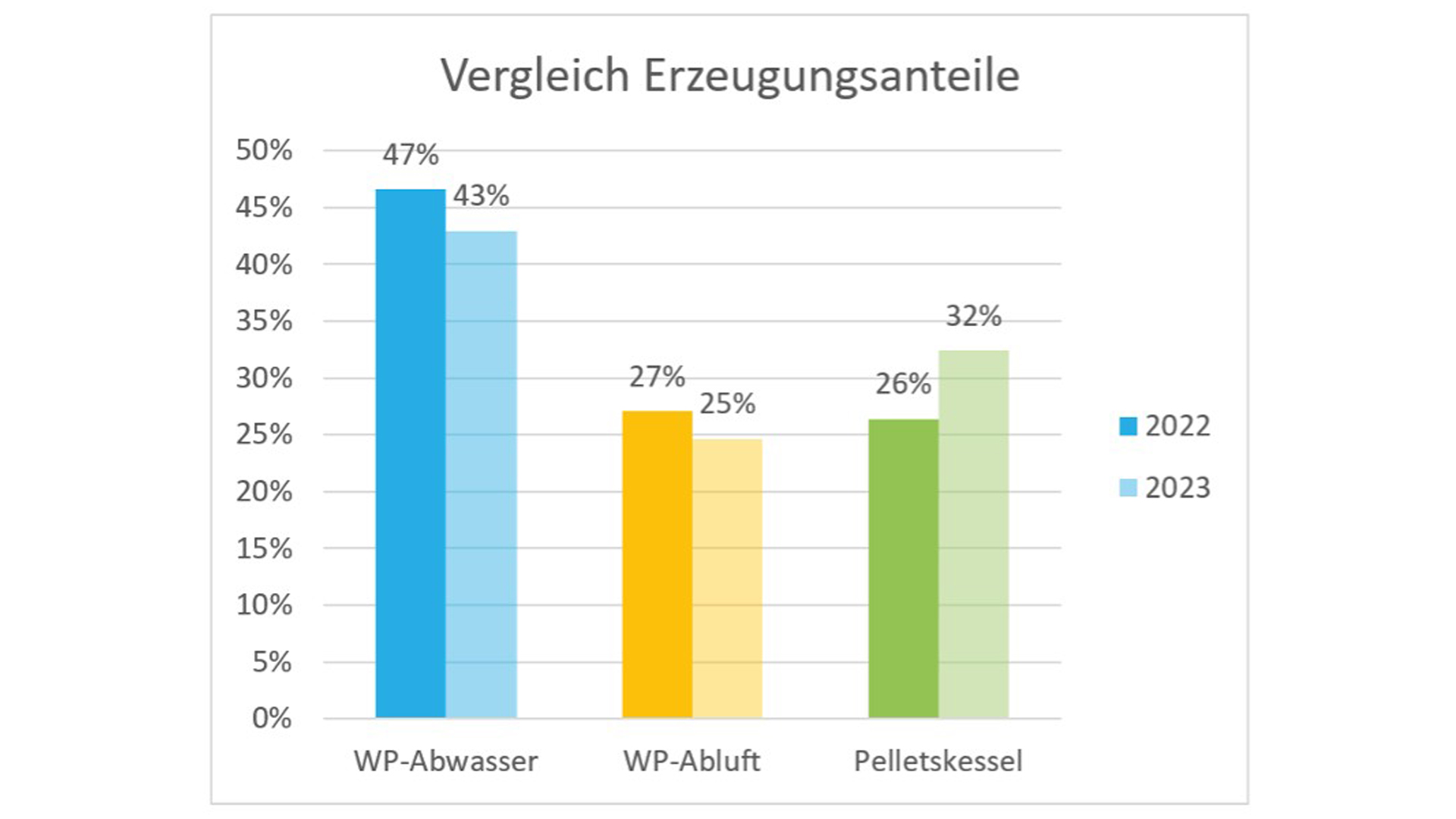
The analyses show that climate action, affordability, and building on within the existing building stock are compatible. Most residents are very satisfied, energy costs were significantly reduced, and the mobility offerings are well used. The klimaaktiv fulfillment level is 63%. The modernization led to annual savings of about €4,000 per household, while also improving residential comfort and social quality. The energy consumption analysis (see figure) shows that, on average, about 70% comes from the building’s waste heat via the wastewater and exhaust air heat pump. Only about 30% comes from a pellet boiler.