Background
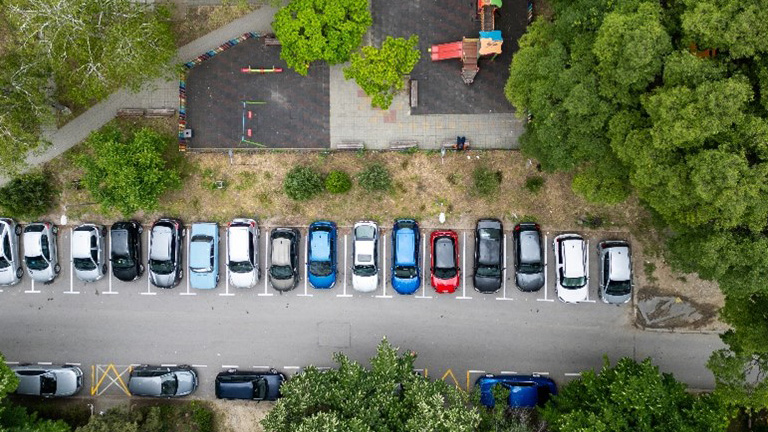
The transition to carbon-neutral cities requires rethinking outdated planning principles that prioritize car traffic. In urban areas, cities often allocate excessively large areas to parking, which contributes to inequitable land use and, through impervious surfaces, creates additional heat hot spots and increases flood risk. Car-centered lifestyles and urban sprawl become further entrenched through oversized parking supply. In addition, high parking space requirements often hinder efforts to add density to buildings. Cities therefore need innovative solutions to implement transformative mobility measures efficiently and cost-effectively.
Project Objectives
SPOT is developing a data-driven, evidence-based tool that calculates demand-based parking requirements for residential and commercial buildings. In SPOT, parking requirements will be statistically modeled using an expert-curated dataset that contains sensible, demand-based, location-specific values. The tool considers both location-related factors (e.g. settlement structure and accessibility) and project-related factors (e.g. car-sharing and mobility contracts). Development takes place in close collaboration with stakeholders and is refined through multiple feedback loops. SPOT will deliver a flexible and transparent tool that supports cities in planning parking based on actual demand. The tool will be tested in pilot cities such as Klagenfurt and then scaled across Austria.