Background
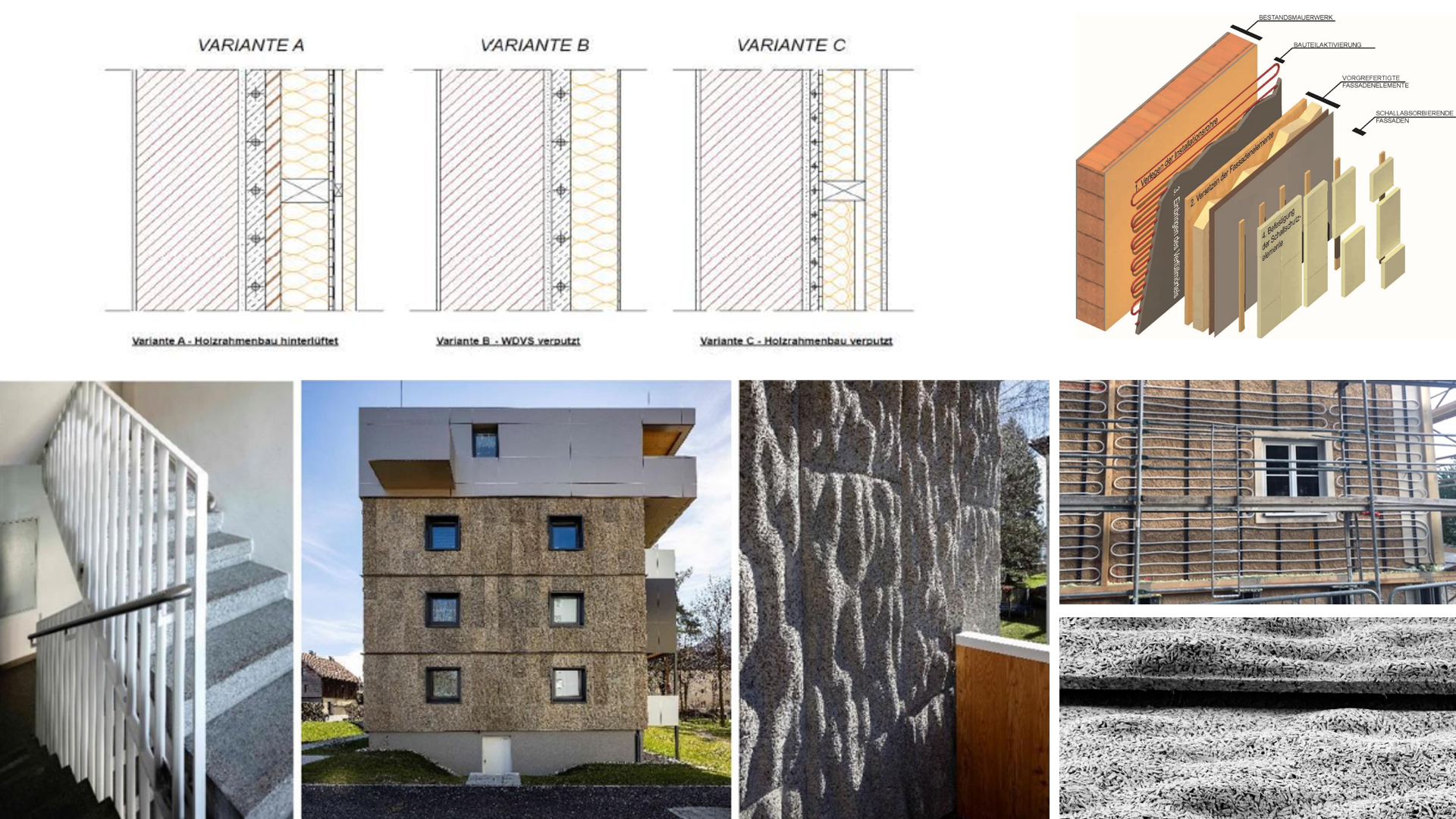
Multi-story urban housing estates in open building layouts that were built across Europe in the 1930s through 1980s contain significant opportunities for improvement and densification that often go unused. Key challenges include insufficient energy performance, noise and pollutant exposure from increasing traffic, the settlement’s aging demographics, the need to adapt to today’s residents’ needs, and meeting future housing demand, such as barrier-free apartments. The overarching goal of the project was to combine technical and social innovations and implement them in a demonstration building. The project itself integrated state-of-the-art technologies in noise control, construction, and building services engineering with requirements related to mobility, energy, infrastructure, open space, and demographics, involving residents throughout. A particular innovation was the use of a multifunctional facade that included an intelligent new combination of largely existing technologies such as TABS – Thermally Activated Building Systems and sound absorbers, and served as an exemplary upgrade of older existing buildings worth preserving but in urgent need of renovation to meet the requirements of the 21st century. The measures planned and implemented as part of the demonstration project were subjected to an intensive monitoring process. This applied in particular to the performance of the multifunctional facade as well as the energy supply of the buildings (TABS, PV). The complex interactions resulting from the holistic approach chosen for the project were also evaluated, and the measures implemented were subjected to a success review, especially in the tension field of noise reduction, open-space design, and mobility. The project serves as a prototype for further implementations of smart modernization in the city of Hallein and far beyond. The demonstration initiative on energy-efficient and climate-conscious renovation showed that creating new housing space brings positive effects and thereby enhances open spaces and the surrounding environment overall. The insights gained from detailed analyses were used to optimize and further develop the elements applied.
Key Results
The demonstration building illustrates how buildings from the 1930s through 1980s can be densified while also being renovated sustainably. In particular, the minimally invasive renovation using a multifunctional facade represents an innovation that enables renovation while occupied and at the same time includes an external upgrade of the heating system with TABS.